The best personalised wooden gifts are not ordinary products with a logo added at the last minute. They begin with a real use, a suitable piece of wood and a clear idea of what the personal detail should communicate.
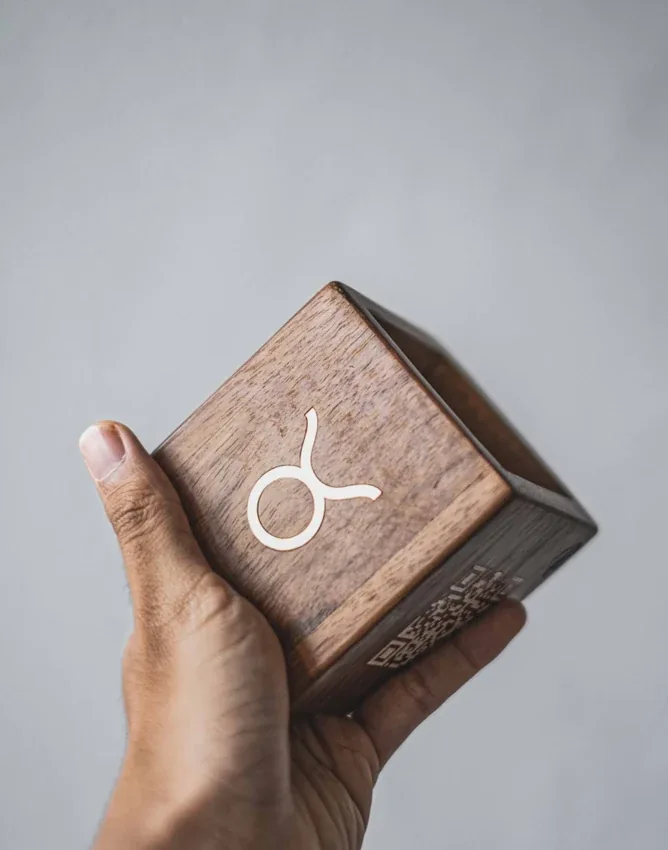
The holder shown here is a simple example. Its form is practical and quiet. Reclaimed wood brings grain, colour and character, while the engraved mark gives it a specific identity. It could belong on a hotel reception desk, in a guest room, in an office or inside a considered corporate gift set.
The object remains useful before anyone notices the personalisation. When the logo, name or message is seen, it feels integrated rather than applied.
Personalisation starts with purpose
Before choosing lettering, placement or technique, begin with a more useful question: what will the object do?
A desk holder has to keep small items organised. A room accessory should make sense for guests and staff. A serving piece must feel comfortable to handle. A gift should suit the person receiving it, not simply carry the sender’s identity.
Purpose influences dimensions, weight, available surface and the best position for a mark. A logo that looks balanced on a wide tray may feel crowded on a narrow holder. A long message that works on a presentation box may become unreadable on a small object.
For this reason, i-REWOOD reviews every custom request for feasibility. The discussion begins with use, quantity, timing and practical conditions. Personalisation comes next, as part of the object rather than a separate decorative layer.
Make the logo part of the design
Branding is often treated as a final production step: make an object, then find somewhere to place the logo. A better result usually comes from considering the mark earlier.
The scale should relate to the available surface. Its position should respect edges, openings, curves and the direction of the grain. Fine details may need to be simplified, especially when the available area is small.
Restraint often makes the result feel more premium. A small engraved mark on the front of a holder may communicate more confidence than a large logo covering the surface. The object still feels like an object, not an advertisement.
This is particularly relevant for hospitality and design-led brands. Guests experience the material, weight and function first. The identity is present without interrupting the atmosphere of the space.
Why reclaimed wood changes the gift
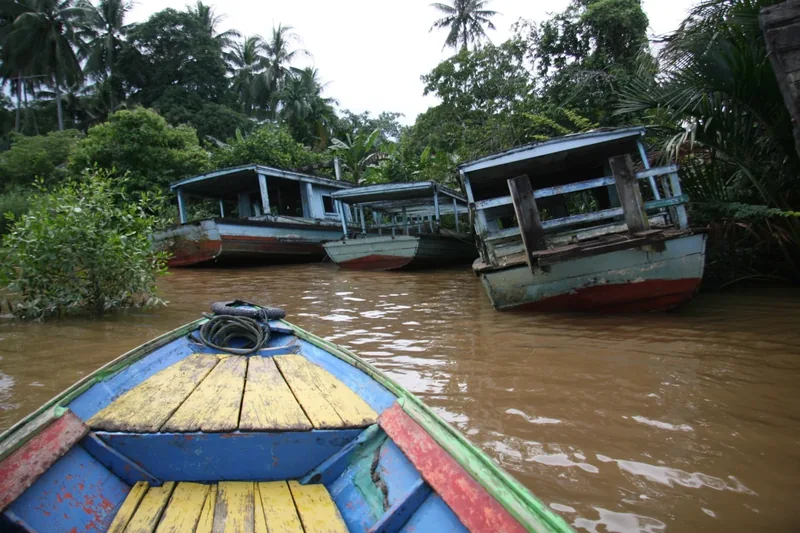
Many promotional products aim for perfect visual repetition. Reclaimed wood introduces something different: visible grain, tonal variation and traces of a previous life.
At i-REWOOD, one of the materials we work with is reclaimed Ulin, also known as Borneo ironwood. Ulin is valued for its density and durable character. When recovered timber is selected and prepared for a new object, the material already carries a history before the personal message is added.
One holder may have straighter grain; another may show deeper colour or a small mark from the timber’s earlier use. Those variations are part of working with reclaimed wood and should be understood when planning a repeated order.
For many brands, individuality is an advantage. Pieces belong to the same family without looking cloned. A corporate gift or hotel accessory can feel considered rather than generic.
Read more about reclaimed Ulin wood in Bali and follow the material’s journey from Kalimantan to Bali.
Choose the right personal detail
There is no single technique for every project. The right choice depends on the wood, artwork, object, desired contrast and everyday use.
Engraved marks
Engraving can create a precise detail without adding another material to the surface. It can work for names, dates, short messages and simplified logos. Depth, scale and position should be tested so the mark remains clear within the natural grain.
Painted lettering
Paint can add stronger contrast or introduce a brand colour. It may suit designs that need to be read quickly, but the colour and finish should work with the material rather than hide it.
Brass and other details
Brass can bring warmth and a more architectural character to reclaimed wood. It may suit selected marks or details where the design and production method make sense. A QR detail can also connect a physical object to a menu, product story or digital service. Every option still requires a feasibility review.
The B2B & White Label page presents the current personalisation directions as starting points.
Useful objects make stronger gifts
A personalised gift is more likely to remain in everyday life when it solves a small problem or supports a familiar ritual.
A holder can organise a desk or reception counter. A tray can welcome a guest or present amenities. A box can protect a meaningful item. A serving board becomes part of shared meals. Coasters and small accessories find a natural place in a room without demanding attention.
This is why the object should be chosen before the branding method. The recipient may appreciate the material story and personal detail, but continued use gives the piece a longer life.
For a brand, that continued use creates a quieter form of recognition. The logo is encountered through a helpful object rather than a disposable promotional item.
Designed for hospitality and corporate projects
Hotels, villas, restaurants and spas use small objects across many guest touchpoints. Reception holders, key trays, amenity presentations, tissue boxes, menu supports and welcome gifts all contribute to the feeling of a place.
Custom wood can help these elements feel connected. The same material language can appear across different objects while the branding remains subtle. Reclaimed Ulin also works naturally with materials often found in Bali interiors, including stone, plaster, brass, linen and ceramics.
Operational reality matters as much as appearance. Hospitality pieces may be handled frequently and cleaned by different team members. Quantity, replacement planning, finish and care should be discussed before production.
Corporate gifts have a different challenge: they must express appreciation, represent an organisation and remain suitable for different recipients. A company mark, event name or short message may be enough. For a smaller group, individual names may also be considered. The aim is not the largest possible logo, but an object someone chooses to keep.
From reference to approved sample
A clear brief makes custom development more efficient. It does not need to be a technical drawing at the beginning, but it should explain the essentials.
Share the object, intended use, approximate dimensions, quantity, preferred timing and where it will be used. Include the logo or artwork in the best available format. References for mood, finish or placement are also useful.
The next step is a feasibility review. Reclaimed timber has dimensional limits, and some shapes or very fine details may not suit the available material or workshop process. Adjustments may be proposed before a quotation or sample is prepared.
A sample confirms more than the logo. It allows the client to check proportions, weight, stability, finish and the way the object fits into daily use. Production should begin only after these practical details are understood and approved.
Natural variation needs clear expectations
Wood is not a flat, uniform background. Grain can pass through lettering. Colour changes from one part of a reclaimed plank to another. Old cuts, holes or weathering may influence how a usable section is selected.
For small quantities, pieces can sometimes be selected for a closely related appearance. For larger runs, variation should be expected and defined. Client and workshop can agree which natural characteristics are welcome and which should be excluded.
Variation in reclaimed wood is not the same as careless production. It is a material reality that requires thoughtful selection and clear quality standards.
Finish and care belong to the design
The finish affects colour, touch, maintenance and response to everyday use. A decorative holder, food-contact board and frequently cleaned hotel accessory do not necessarily need the same treatment.
Tell the workshop how the piece will be handled, cleaned and stored. Water, food, heat and strong sunlight all matter. No natural material is maintenance-free, and clear care guidance helps the object age as intended.
What to include in your project brief
Before requesting a custom wooden piece, gather the following information:
- the object or function you have in mind;
- approximate dimensions and quantity;
- the logo, name, message or QR detail;
- preferred placement and visual contrast;
- where and how the object will be used;
- finish references, delivery location and target date.
If some details are still open, that is fine. A project can begin with an idea. The feasibility review turns it into a direction that respects the material and workshop process.
Crafted in Bali for a specific story
Personalisation is most convincing when connected to the object’s material, purpose and place. Reclaimed wood already carries a history. Crafting it in Bali gives that material a new form, while engraving a logo, name or message connects it to the next owner.
The result may be small: a holder on a desk, a welcome object in a villa or a gift shared after an event. Its scale does not reduce its meaning. A useful object can quietly represent a brand or memory for years.
That is the aim of personalised wooden gifts at i-REWOOD: not simply to mark a product, but to make the mark belong.