
Bali is a beautiful place to live with natural materials. It is also a demanding environment for them. Heat, humidity, heavy seasonal rain, strong sunlight and insects all influence the way furniture, decorative objects and architectural materials age. That is one reason material choice matters so much here.
At i-Rewood, one of the materials we work with is reclaimed Ulin, also known as Borneo ironwood. It is a dense tropical hardwood traditionally associated with demanding applications in Indonesia and Borneo. Rather than using newly harvested timber, our approach begins with wood that has already had a previous life and can be prepared for another one.
For us, that combination — a naturally durable material, reclaimed from an existing source and transformed locally in Bali — makes Ulin particularly interesting for everyday objects, hospitality pieces and custom projects.
What is Ulin wood?
Ulin is the Indonesian name commonly used for Eusideroxylon zwageri, a tropical hardwood species native to parts of Indonesia and Borneo.
Its English name, Borneo ironwood, gives a clue to its character. Ulin is known for being exceptionally dense and hard compared with many commonly used timbers. Historically, these properties made it suitable for demanding construction applications, including structural elements, posts, shingles, bridges, marine work and other situations where durability mattered.
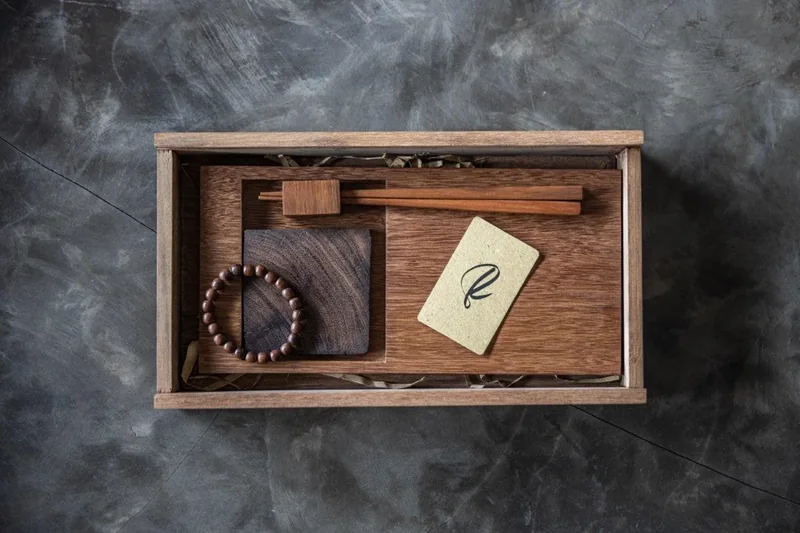
Today, the same physical qualities can be relevant at a much smaller scale. A piece of timber that once formed part of a large structure may later become a serving board, tray, incense holder, coaster, hotel accessory or custom object. The scale changes, but the material still carries the characteristics — and often the visible marks — of its previous use.
Why Bali’s climate changes the way we think about wood
Bali’s tropical climate creates a particular set of conditions for wood. Humidity can remain high for long periods. Buildings may be naturally ventilated rather than sealed and climate-controlled. Rain can be intense during the wet season. Outdoor and semi-outdoor spaces are part of everyday life. Insects and fungi are also a greater consideration than they may be in cooler, drier climates.
None of this means that one species of wood is completely immune to every problem. No natural material should be sold as maintenance-free or indestructible.
However, choosing a dense, naturally durable hardwood can make sense when the object is intended for a tropical environment. The material itself becomes part of the design decision, rather than something selected only for colour or appearance.
With Ulin, density and durability are among the reasons it has been valued for generations. For i-Rewood, the objective is not to reproduce heavy construction in miniature. It is to use those material qualities intelligently in objects that belong naturally in Bali homes, villas, restaurants, hotels and everyday spaces.
Reclaimed wood is different from newly harvested wood
When we say reclaimed Ulin, the word “reclaimed” matters. The timber did not begin its journey in our workshop.
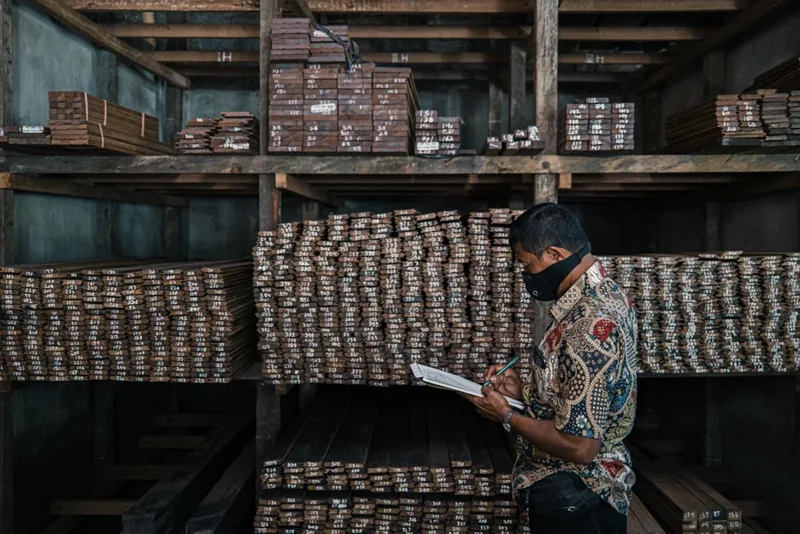
It may have previously been part of a structure, boat, bridge or other construction. Once recovered, the usable sections are selected, cleaned, cut and prepared for a different purpose.
That previous life can remain visible. Small holes, colour variations, old cuts, changes in grain and traces of weathering may appear in reclaimed timber. These are not necessarily defects. They can be part of the material’s identity.
At the same time, reclaimed wood requires careful selection. Not every recovered piece is suitable for every object. A workshop needs to look at cracks, weak sections, old fastener positions, grain direction and the dimensions available before deciding how to use a piece.
This means that working with reclaimed Ulin is not simply a matter of cutting a shape from a plank. The material often influences the object.
Why reclaimed Ulin can be a good fit for hospitality
Hospitality objects live harder lives than many household objects. A coaster in a hotel room may be used by hundreds of guests. A tray in a restaurant is handled repeatedly throughout the day. A menu holder, tissue box, amenity tray or bathroom accessory may be cleaned frequently. A branded object at a reception desk may stay in use for years.
For hotels, villas, restaurants and spas, the question is therefore not only “Does it look good?” It is also “How will it age?”
This is where material selection becomes important. Dense reclaimed hardwood can give hospitality objects a sense of weight and permanence. Ulin also has a visual character that works naturally with many of the materials already common in Bali interiors: stone, lime plaster, concrete, brass, linen, ceramics and natural fibres.
The result does not have to feel rustic. With the right machining and finishing, reclaimed Ulin can be shaped into very clean, contemporary forms. That contrast is part of its appeal: an old material transformed into a precise new object.
From heavy timber to small everyday objects
One of the interesting things about reclaimed wood is the change of scale. Ulin is often associated with large structures and demanding architectural uses. At i-Rewood, we explore what happens when that same material enters everyday life.
A small coaster beside a coffee cup. An incense holder on a shelf. A serving board placed at the centre of a table. A tray in a hotel room. A branded wooden piece created for a restaurant or company.
These objects do not need to announce themselves as “sustainable design” every time someone sees them. They simply need to work well, feel good to use and have a story that makes sense. The reclaimed material becomes part of that story rather than the entire story.
The importance of finishing
Even a naturally durable wood needs an appropriate finish and sensible care. The correct finish depends on the intended use of the object.
A decorative piece may have different requirements from a serving board. A hotel amenity tray may be cleaned differently from an incense holder. A piece intended for food contact requires particular attention to the finishing products used.
At i-Rewood, finishing is therefore treated as part of the product design, not as an afterthought. A finish can influence colour, texture, water behaviour and the way the surface changes over time. It can also determine how easy an object is to maintain.
For custom and hospitality projects, we recommend discussing how the product will actually be used before finalising the finish. A beautiful sample is only useful if it still makes sense in daily operation.
Reclaimed does not mean identical
Mass production often trains us to expect perfect visual repetition. Reclaimed timber works differently.
Two pieces made from the same design can have different grain, colour or visible traces from their previous life. If a project requires a perfectly uniform appearance across hundreds of pieces, this needs to be discussed from the beginning.
For some brands and hospitality projects, variation is exactly what makes reclaimed wood appealing. Each object feels related to the others, but not cloned. For other projects, tighter visual selection may be necessary.
Neither approach is automatically better. It depends on the design intention. The important thing is to understand the material before production begins.
Why reclaimed Ulin deserves a second life
There is another important reason to consider reclaimed Ulin carefully. Ulin is a slow-growing species, and its natural populations have faced pressure from historic logging and habitat loss. That makes the decision to reuse existing timber particularly meaningful.
Reclaimed material is not a licence to make vague environmental claims. A product still requires energy, transport, machining, finishing and labour. But extending the useful life of timber that already exists is fundamentally different from treating old material as waste and replacing it automatically with newly harvested wood.
A former structural element can become an object used every day. That is a practical form of material reuse. And for us, it is one of the most interesting parts of the work.
Designed and crafted in Bali
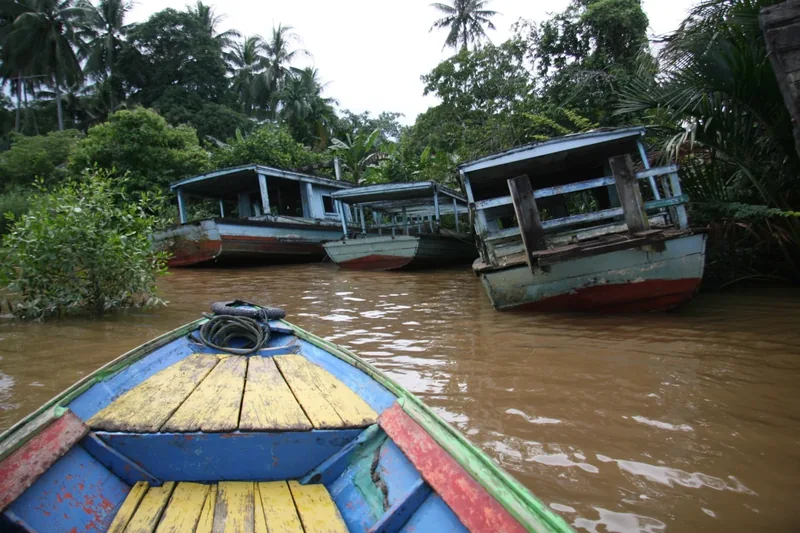
Working with reclaimed wood also connects the material to place. The Ulin we use has its origins in Kalimantan, but its next chapter happens in Bali.
Here, the timber is selected, machined, assembled, sanded and finished according to the object being made. For custom projects, the process can also include engraving, branding, brass details, stone, different finishes or adaptations for hospitality use.
This local transformation allows us to work at different scales. Sometimes the result is a single personalised piece. Sometimes it is a small collection. Sometimes it is a repeated object developed for a hotel, restaurant, brand or distributor.
The common point is the material.
Choosing wood for a project in Bali
If you are specifying wooden objects for a tropical project, start with the real conditions of use.
Will the object be indoors or semi-outdoors? Will it regularly encounter water? Will staff clean it several times a day? Does it need to be food-safe? Does the brand want every piece to look nearly identical, or is natural variation welcome? How long is the object expected to remain in service?
These questions are often more useful than choosing wood from a photograph. A good material choice begins with the environment the object will live in.
For projects in Bali, reclaimed Ulin is one material worth considering precisely because its story and physical character are both connected to tropical life.
A material from one life to the next
Reclaimed Ulin does not need to hide where it came from. Its density, grain, marks and colour all reflect a material that existed before the object we see today.
For i-Rewood, that is not something to erase. It is something to work with.
The goal is to take a timber known for strength and longevity and give it a new scale, a new function and a new place in everyday life.
From Kalimantan to Bali. From structure to object. From one life to the next.