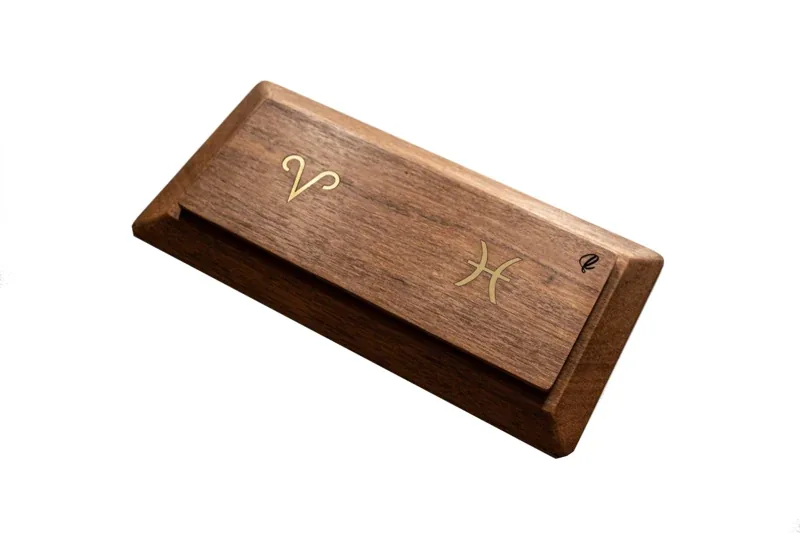
The most successful custom wooden objects solve a practical problem first. A magnetic knife rack keeps essential tools visible and within reach, but it can also introduce the material, proportions and identity of a kitchen into one quiet object.
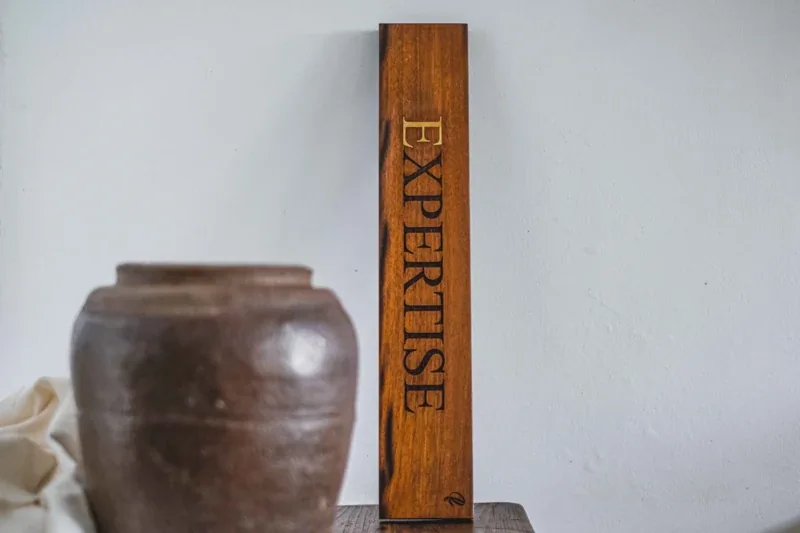
The example shown here combines reclaimed wood with lettering. The result is functional rather than decorative for its own sake: the knives have a clear place, the wall remains organised and the wooden surface contributes warmth to the room.
For a private kitchen, restaurant, villa or hospitality project, the details matter. Length, knife selection, magnetic holding, mounting, lettering, finish and daily cleaning all need to be considered together before production.
Start with the way the kitchen works
A knife rack should be designed around real use. Before choosing the timber or adding a logo, consider who will use it, which knives it needs to hold and where it will be installed.
A home cook may need space for a small personal set. A restaurant station can require faster access and more frequent handling. A villa or demonstration kitchen may place greater emphasis on how the rack relates to the interior.
The position should be easy to reach without interrupting preparation. It should also avoid areas where heat, excessive moisture or constant splashing could affect the wood and finish. Wall construction and mounting conditions need to be understood before the final dimensions are confirmed.
These questions influence the entire object. A beautiful rack that does not suit the workflow will not remain satisfying for long.
Why reclaimed wood belongs in functional design
Reclaimed wood brings history into an object that is used every day. Grain, tonal variation and traces of a previous life create a surface that does not feel anonymous or mass-produced.
At i-REWOOD, one of the materials we work with is reclaimed Ulin, also known as Borneo ironwood. It is a dense hardwood associated with demanding applications. When suitable recovered sections are selected and prepared, the material can begin a new chapter as a smaller object for contemporary life.
Reclaimed timber is naturally variable. Two racks made to the same design may show different grain or colour. This should be expected and discussed, particularly for hospitality or multi-location projects that require a family of related pieces.
Learn more about reclaimed Ulin in Bali and how the material travels from Kalimantan to the workshop.
Length and capacity must be developed together
The visible length of a magnetic knife rack is only one part of the design. The types of knives, their weight, handle shape and intended spacing all influence capacity.
Trying to fit too many knives into a short rack can make removal awkward and create unnecessary contact between blades. Allowing deliberate spacing makes the arrangement easier to read and use.
For a custom project, provide a list or photograph of the knives when possible. Approximate blade and handle dimensions are useful. A restaurant may also want to consider whether different stations require different rack lengths rather than one universal size.
The sample stage is important because magnetic performance cannot be judged from appearance alone. The holding system must be assessed with the intended knives and the completed wooden construction.
Magnetic holding requires practical testing
A magnetic rack should hold each knife securely while still allowing comfortable removal. The required balance depends on the internal magnetic layout, the thickness of material between the magnets and blade, and the characteristics of the knives themselves.
Not every knife responds identically. Blade material, size, weight and contact area can affect the result. For that reason, a custom rack should be tested with representative knives before a larger production is approved.
The goal is not simply maximum force. If removal feels abrupt or inconvenient, the rack may not support the intended workflow. Secure holding and natural handling need to be evaluated together.
i-REWOOD reviews every custom request for feasibility. Final performance, dimensions and production requirements should be confirmed through an approved sample rather than assumed from a reference photograph.
Lettering can give the rack a specific identity
Lettering on wood can transform a practical rack into an object made for a particular kitchen, chef, restaurant or property.
The mark might be a name, short phrase, room identity or simplified logo. It should be readable without overwhelming the grain. Scale and placement need to respect the knives, the rack edges and the available surface.
Depending on the design and finish, lettering may be engraved, painted or developed through another feasible method. Fine artwork may need simplification, especially when the mark is small or the timber surface has strong natural variation.
A clear artwork file helps the workshop evaluate line thickness and proportions. The B2B & White Label page shows several personalisation directions that can be considered as starting points.
A useful detail for restaurants and hospitality
In a restaurant, kitchen objects are part of an operational system. They need to support speed, organisation and cleaning, often under heavier use than objects in a home.
A custom magnetic knife rack can help define a station while keeping tools off the worktop. For an open kitchen, it may also contribute to the visual order seen by guests.
Hospitality projects have additional questions. Will the rack be used by permanent staff or changing teams? Is it intended for a private villa kitchen, a cooking class, a breakfast area or a professional back-of-house environment? How will replacement and maintenance be handled?
Answers to these questions determine whether one custom design is appropriate or whether different versions are needed for different spaces.
Mounting is part of the object
The wall connection should never be treated as an afterthought. A rack carrying knives needs a mounting approach suited to the wall material, object weight and daily handling.
Concrete, masonry, timber and lightweight partitions do not require the same hardware. The installation environment should be identified early so that the final design can accommodate an appropriate solution.
Local installation conditions may require assessment by a qualified installer. The workshop can prepare the wooden object and agreed fixing provisions, but safe installation depends on the actual wall and hardware used on site.
For hospitality projects, mounting instructions and the replacement process should be documented so that maintenance teams understand how the rack is intended to be handled.
Finish and cleaning should suit the location
Kitchen objects encounter hands, humidity, airborne cooking residue and regular cleaning. The chosen finish should support the intended environment while allowing the reclaimed wood to retain its character.
A rack installed near a sink or cooking surface may face more moisture or residue than one in a dry preparation area. Cleaning methods should therefore be discussed during development.
Aggressive chemicals or prolonged soaking are generally not appropriate for natural wood. Clear care guidance helps staff maintain the surface without damaging the finish or lettering.
No natural material is maintenance-free. A thoughtful finish and realistic placement make long-term care more manageable.
Natural variation and repeated production
For a single rack, the individual grain can become a defining feature. For a repeated hospitality or retail order, variation needs to be managed across the series.
The dimensions, lettering position and functional performance can remain consistent while colour and grain vary. Clients can define whether they prefer close visual matching or welcome a wider range of natural character.
Material selection also affects production planning. Reclaimed boards have dimensional limits, so quantities and target sizes should be discussed early. Designing with realistic tolerances allows the workshop to use the available material responsibly.
From idea to approved sample
A useful brief should include the intended location, rack length, number and type of knives, approximate knife dimensions, desired lettering, quantity, finish references and target delivery date.
Photographs of the wall and surrounding kitchen are helpful. For branding, provide the clearest available artwork. For a repeated order, explain whether every rack will have the same text or whether names and locations will change.
After feasibility review, dimensions and design can be refined. A sample then allows the client to assess the material, spacing, magnetic holding, handling, lettering, finish and mounting concept.
Only after those elements are understood should the project move towards production.
Made in Bali for the way a space is used
A custom magnetic knife rack is a small architectural object. It connects the wall, tools, working routine and identity of a kitchen.
Reclaimed wood gives the rack warmth and history. Lettering gives it a specific place. Careful testing ensures that the functional idea is more than a visual promise.
For i-REWOOD, this is where custom design becomes meaningful: an object created not only to look right, but to belong to the way people work every day.